


If you’re a coach, one of the most important capacities you can bring into the room isn’t a tool, a model, or a framework.
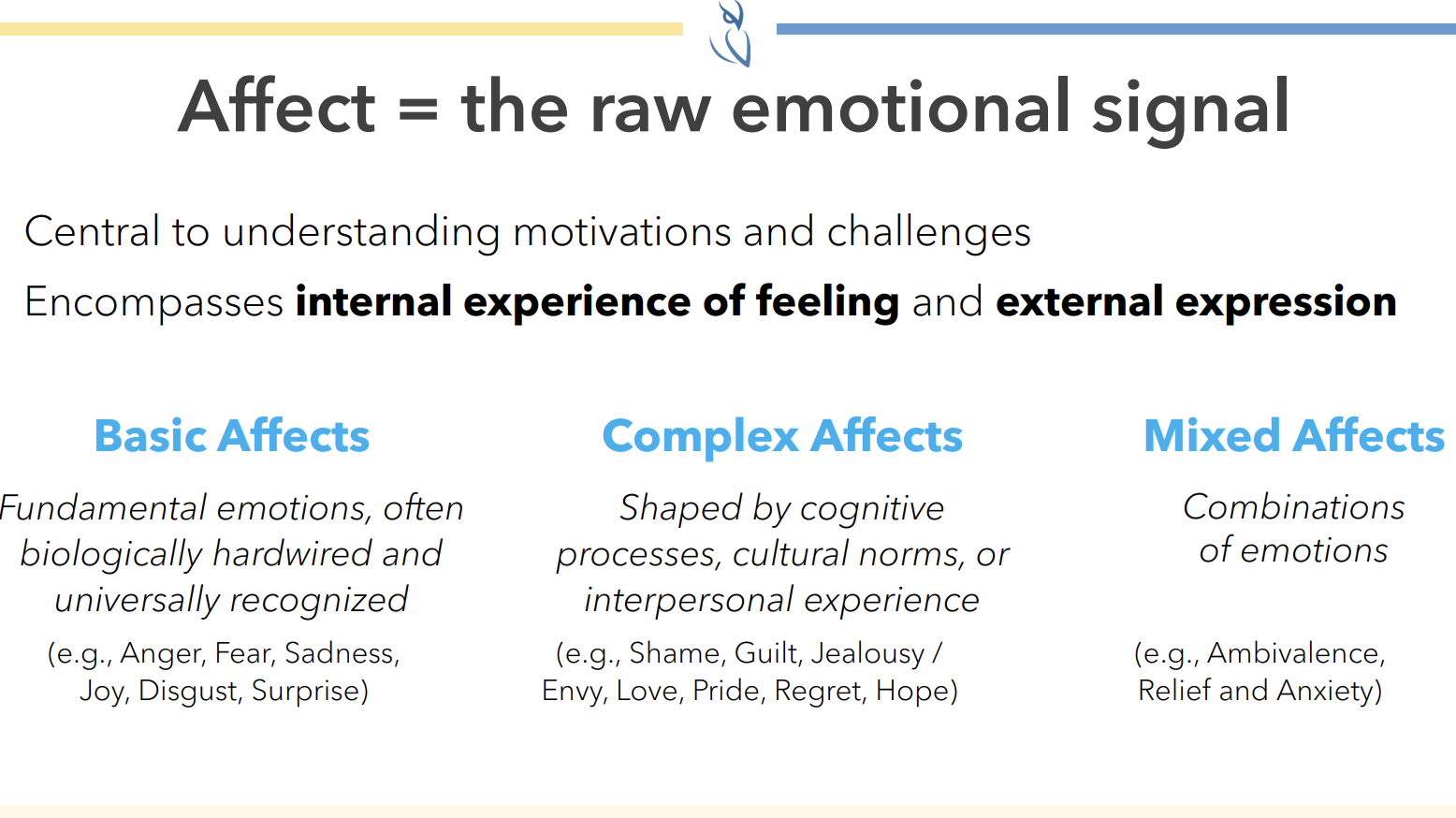
It’s the ability to understand affect — the emotional undercurrent shaping your client’s internal experience.
Why is this is important? Well, most clients don’t walk into a session saying, “I’m feeling shame.”
Or, “This is activating fear.”
Or, “My defensiveness is actually masking sadness.”
Affect shows up indirectly, like a shift in tone, more than usual ‘jokieness’, a long pause or a glance down.
Our clients’ feelings are ALWAYS present, and sometimes they run deep. From a psychodynamic perspective, affect is information – the roadmap to what matters most to the client.
It tells us what feels threatening, what feels vulnerable, and where the client’s deeper work might be.
When coaches learn to attune to affect, clients feel seen and understood – and that increases safety in the coaching space.
And when a client feels safe enough to feel, guess what happens? They feel safe enough to change.
Understanding affect in coaching isn’t about becoming a therapist. It’s about becoming a coach who can work with the whole human in front of you — not just their goals, performance metrics, or assessment results.
If you’re a coach, I warmly invite you to consider:
What emotions are being felt in your sessions… but not being spoken or acknowledged? How might attuning into them transform your coaching space?
For coaches, the ability to recognize, tolerate, and hold client affect is essential.
When clients feel safe enough for their full experience to be present, defenses soften—allowing deeper exploration, insight, and more meaningful change.
#PsychodynamicCoaching #LeadershipForHumans